← See all travel language courses

Learn Swahili for Travel

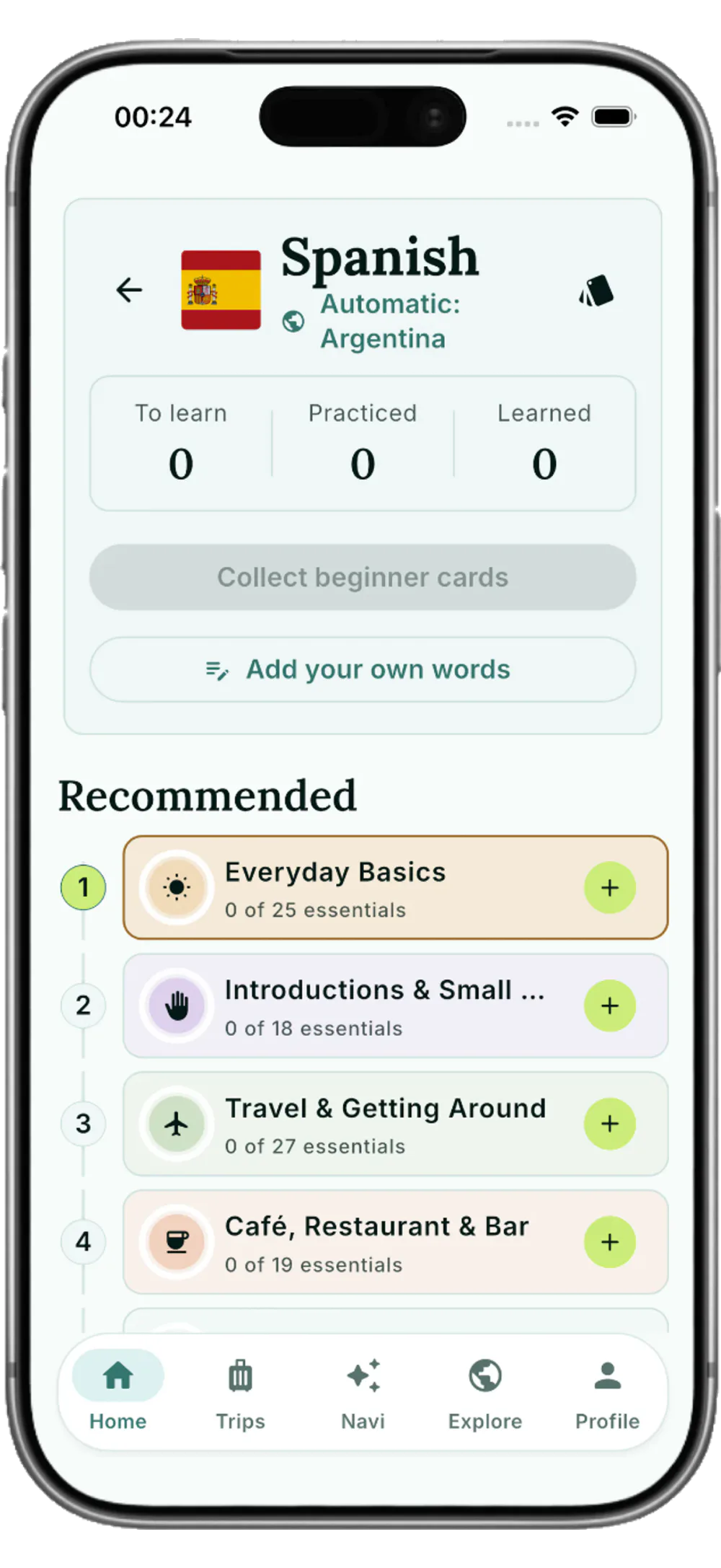
Build useful Swahili skills for your next trip with the IKARU app. The course combines practical vocabulary, travel phrases, and review.

Where Swahili is useful for travelers

Swahili, also called Kiswahili, is used widely across East Africa. The course is especially relevant to trips through Tanzania, Kenya, Uganda, and eastern Democratic Republic of the Congo. Local usage, greetings, and the mix of Swahili with other languages can vary by place and situation.

  • Tanzania
  • Kenya
  • Uganda
  • Congo - Kinshasa

What you'll find in these travel phrases

Use these cards as a practical starting point: greet people politely, understand simple replies, and handle common moments without relying on a translation screen for every sentence.

  • Start with greetings, thanks, polite requests, and introductions.
  • Ask for directions and move around by local transport.
  • Handle hotel check-in, food orders, and simple price questions.
  • Ask for help or explain when you need a doctor.

36 essential Swahili travel phrases

These are a practical starting set, grouped by the moments travelers are most likely to encounter. The list is intentionally smaller than a full course: the IKARU app is where the wider curriculum and repetition continue.

Greetings and politeness

Start with a greeting, a polite request, or a simple thank-you.

Swahili Habari?
English Hello? / How are you?
Pronunciation hah-BAH-ree
When to use it

A common greeting; a reply can be Nzuri, meaning fine.

Swahili Hujambo?
English Hello? (to one person)
Pronunciation hoo-JAHM-boh
When to use it

The singular form of a standard greeting; Hamjambo? is used for a group.

Swahili Shikamoo
English Respectful greeting
Pronunciation shee-kah-MOH
When to use it

Used when greeting an older person or authority figure; the traditional response is Marahaba.

Swahili Tafadhali
English Please
Pronunciation tah-fah-DHAH-lee
When to use it

Add it to a request when you want to sound polite.

Swahili Asante sana
English Thank you very much
Pronunciation ah-SAHN-teh SAH-nah
When to use it

Asante is the shorter everyday thank-you.

Swahili Samahani
English Excuse me / Sorry
Pronunciation sah-mah-HAH-nee
When to use it

Use it to get someone's attention or apologize for a minor problem.

Swahili Kwaheri
English Goodbye
Pronunciation kwah-HEH-ree
When to use it

A standard parting phrase.

Introductions and understanding

Keep the conversation moving when you are meeting someone or need a slower explanation.

Swahili Unaongea Kiingereza?
English Do you speak English?
Pronunciation oo-nah-ON-geh-ah kee-een-geh-REH-zah
When to use it

A useful bridge when you need to switch languages.

Swahili Ninaongea Kiswahili kidogo tu.
English I speak only a little Swahili.
Pronunciation nee-nah-ON-geh-ah kee-swah-HEE-lee kee-DOH-goh too
When to use it

Set expectations while still showing that you are trying.

Swahili Sielewi.
English I do not understand.
Pronunciation see-eh-LEH-wee
When to use it

Use it plainly, then follow with a request to repeat or slow down.

Swahili Tafadhali sema polepole.
English Please speak slowly.
Pronunciation tah-fah-DHAH-lee SEH-mah poh-leh-POH-leh
When to use it

A polite way to ask for a slower explanation.

Swahili Unaweza kunielekeza?
English Can you direct me?
Pronunciation oo-nah-WEH-zah koo-nee-eh-LEH-kay-zah
When to use it

Use it when you need help finding a place or route.

Swahili Jina langu ni ...
English My name is ...
Pronunciation JEE-nah LAHN-goo nee
When to use it

A simple introduction; replace the dots with your name.

Directions

Ask where something is, whether it is close, and how to reach it.

Swahili ... iko wapi?
English Where is ...?
Pronunciation EE-koh WAH-pee
When to use it

Replace the dots with a place or landmark. The exact agreement can change with the noun.

Swahili Naweza kupata wapi ...?
English Where can I find ...?
Pronunciation nah-WEH-zah pah-TAH-tah WAH-pee
When to use it

Useful for finding a taxi, station, shop, or service.

Swahili Ninawezaje kufika ...?
English How can I get to ...?
Pronunciation nee-nah-WEH-zah-jeh koo-FEE-kah
When to use it

Add the destination after the phrase.

Swahili Ni mbali au karibu?
English Is it far or near?
Pronunciation nee MBAH-lee ow kah-REE-boo
When to use it

A quick way to understand whether walking may be realistic.

Swahili Nenda moja kwa moja.
English Go straight.
Pronunciation NEN-dah MOH-jah kwah MOH-jah
When to use it

A direction you may hear or use while navigating.

Swahili Geuka kushoto / kulia.
English Turn left / right.
Pronunciation geh-OO-kah koo-SHOH-toh / koo-LEE-ah
When to use it

Choose kushoto for left or kulia for right.

Transport and arrival

Use these phrases at a bus station, in a taxi, or when checking whether you have reached your stop.

Swahili Kituo cha basi kiko wapi?
English Where is the bus station?
Pronunciation kee-TOO-oh chah BAH-see KEE-koh WAH-pee
When to use it

A specific example of the where-is question.

Swahili Hii ni njia ya kwenda ...?
English Is this the way to ...?
Pronunciation hee nee NJEE-ah yah KWEN-dah
When to use it

Ask before continuing when you are unsure about a route.

Swahili Ninahitaji teksi.
English I need a taxi.
Pronunciation nee-nah-hee-TAH-jee TEK-see
When to use it

A direct request when arranging a taxi.

Swahili Nauli ni kiasi gani?
English How much is the fare?
Pronunciation NOW-lee nee kee-AH-see GAH-nee
When to use it

Ask about the fare before starting a journey.

Swahili Nimeshafika?
English Have I arrived?
Pronunciation nee-meh-shah-FEE-kah
When to use it

Useful when you want to check whether the vehicle has reached your stop.

Hotels, food, and prices

Handle a basic check-in, ask for a practical service, and keep simple market or café conversations moving.

Swahili Nina nafasi iliyohifadhiwa.
English I have a reservation.
Pronunciation nee-NAH nah-FAH-see ee-lee-yoh-hah-fee-dee-WAH
When to use it

Use it when arriving at a hotel or other accommodation.

Swahili Kuna huduma ya Wi-Fi?
English Is there Wi-Fi?
Pronunciation KOO-nah hoo-DOO-mah yah WHY-fy
When to use it

A practical accommodation question.

Swahili Ninaweza kuingia sasa?
English Can I check in now?
Pronunciation nee-nah-WEH-zah koo-ING-ah SAH-sah
When to use it

Ask whether your room or accommodation is ready.

Swahili Hii ni bei gani?
English How much is this?
Pronunciation hee nee BAY GAH-nee
When to use it

Use it when asking the price of an item or dish.

Swahili Maji, tafadhali.
English Water, please.
Pronunciation MAH-jee tah-fah-DHAH-lee
When to use it

A short request for water; keep tafadhali for a polite tone.

Swahili Hapana, asante.
English No, thank you.
Pronunciation hah-PAH-nah ah-SAHN-teh
When to use it

A polite way to decline an offer.

Help and emergencies

Keep these direct phrases available when you are lost, unwell, or need another person to assist you.

Swahili Ninahitaji msaada.
English I need help.
Pronunciation nee-nah-hee-TAH-jee m-sah-AH-dah
When to use it

A clear request when you need assistance.

Swahili Nimepotea.
English I am lost.
Pronunciation nee-meh-poh-TEH-ah
When to use it

Say it before asking for directions or help finding your accommodation.

Swahili Msaada!
English Help!
Pronunciation m-sah-AH-dah
When to use it

A direct call for help in an urgent situation.

Swahili Nahitaji daktari.
English I need a doctor.
Pronunciation nah-hee-TAH-jee dahk-TAH-ree
When to use it

Use it to ask for medical assistance; it is not a substitute for local emergency guidance.

Swahili Nimepoteza mfuko wangu.
English I lost my bag.
Pronunciation nee-meh-poh-TEH-zah m-FOO-koh WAHN-goo
When to use it

Explain a lost-bag problem when asking staff or authorities for help.

Swahili Naomba kutumia simu yako?
English May I use your phone?
Pronunciation nah-OM-bah koo-too-MEE-ah SEE-moo YAH-koh
When to use it

A polite request when you need to contact someone.

36 source-checked starting phrases · Pronunciation is an aid, not a replacement for listening practice.

A few Swahili notes for travelers

Small details can make a short phrase more useful. Keep these points in mind as you practice the cards below.

Greetings carry context

A greeting can be more than a quick hello. Start politely, listen to the reply, and give the other person room to continue the exchange.

Respect changes the wording

Shikamoo is a respectful greeting associated with older people or authority figures. It is useful to recognize, but it should be used with the right context.

Use the phrase, then listen

Travel conversations may move between Swahili, English, and local languages. The goal is a helpful first exchange, not pretending that one phrase works everywhere.

Pronunciation is a starting aid

The guide uses simple pronunciation approximations for beginners. Use the app's review flow to practice listening and repetition rather than treating the spelling as a substitute for hearing the language.

Language notes and sources

The phrase examples and regional notes were checked against the sources below. They are a practical travel starting point, not an exhaustive linguistic guide; wording and register can vary by region and speaker.

Source check: · Source-checked for this pilot; regional usage can vary.

Practice Swahili for real travel moments

Prepare for greetings, directions, transport, food, hotels, and everyday interactions. Continue in the IKARU app when you are ready to practice.

Language learning in the IKARU app