← See all travel language courses

Learn Japanese for Travel

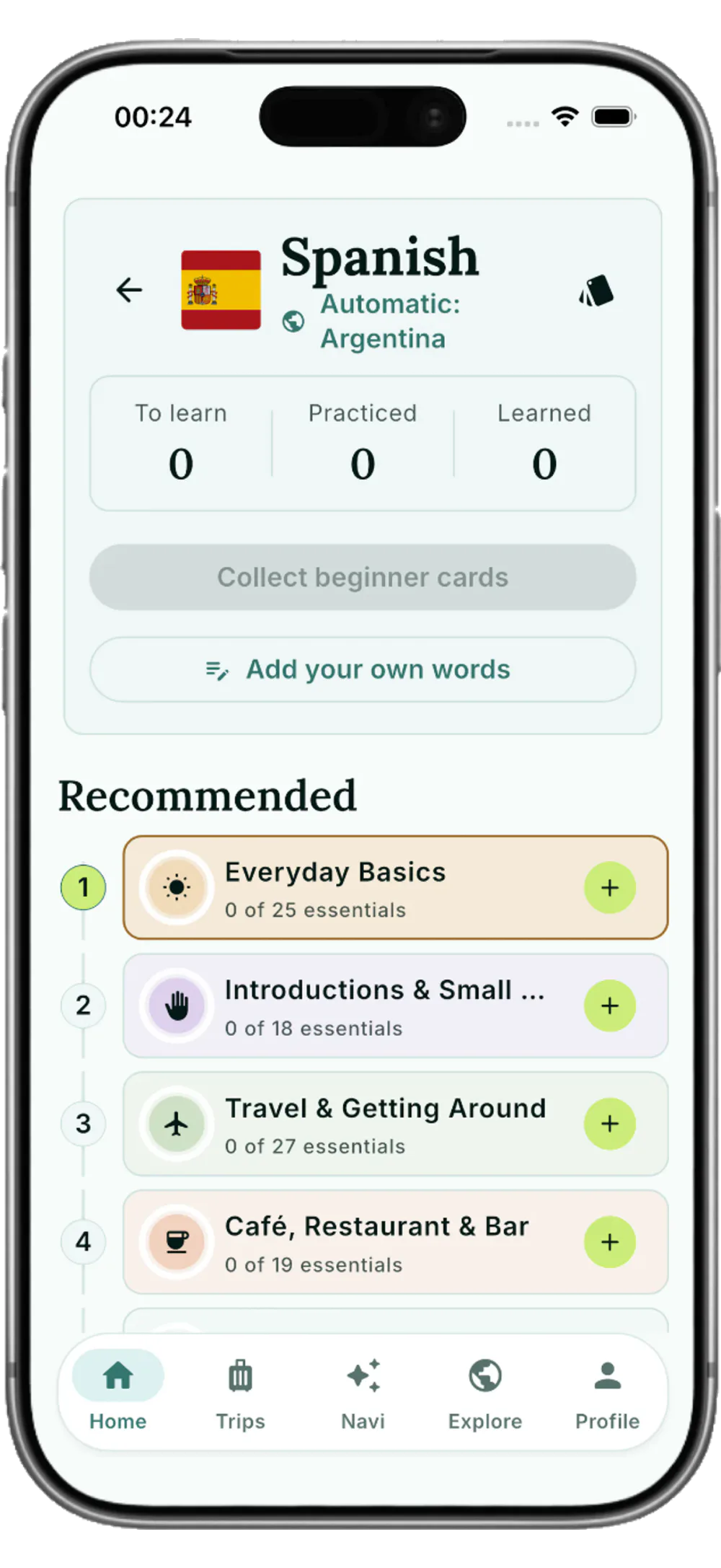
Build useful Japanese skills for your next trip with the IKARU app. The course combines practical vocabulary, travel phrases, and review.

Where Japanese is useful for travelers

Japanese is primarily useful in Japan, where the same travel moment may involve spoken Japanese, written station information, and different levels of politeness. These cards focus on clear, respectful traveler language.

What you'll find in these travel phrases

Use these Japanese cards as a practical starting point: greet people politely, ask simple questions, and handle common travel moments without relying on a translation screen for every sentence.

  • Start with useful Japanese greetings and polite requests.
  • Handle airport, directions, hotel, and travel-disruption moments.
  • Use short questions to keep a conversation moving.
  • Continue with broader vocabulary and repetition in the IKARU app.

24 essential Japanese travel phrases

This source-checked set is grouped by the moments travelers are most likely to encounter. It is a practical starting point, not a fixed word-count quota or a replacement for the wider course in the app.

Greetings and politeness

Start with a greeting, a polite request, or a simple everyday exchange.

Japanese またね
English see you
Pronunciation Mata ne
When to use it

Use these phrases to open a conversation and keep the exchange polite.

Japanese 良い一日をお過ごしください。
English Have a good day.
Pronunciation Yoiichinichiwo osugoshi kudasai.
When to use it

Use these phrases to open a conversation and keep the exchange polite.

Japanese 同じく
English likewise
Pronunciation Onajiku
When to use it

Use these phrases to open a conversation and keep the exchange polite.

Travel basics

Use these when you are explaining the trip or what you need next.

Japanese 旅行
English the trip
Pronunciation Ryokō
When to use it

A few travel basics help you explain the trip and what you need.

Japanese 今日の午後はセンターに行かなければなりません。
English I have to go to the center this afternoon.
Pronunciation Kyō no gogo wa sentā ni ikanakereba narimasen.
When to use it

A few travel basics help you explain the trip and what you need.

Japanese 旅行を最大限に楽しみたいです。
English I want to make the most of the trip.
Pronunciation Ryokō o saidaigen ni tanoshi mitaidesu.
When to use it

A few travel basics help you explain the trip and what you need.

Airport moments

Useful wording for gates, security, and baggage collection.

Japanese どの門ですか?
English Which gate?
Pronunciation Dono mondesu ka?
When to use it

Use these while moving through an airport or collecting your bags.

Japanese 保安検査を通過したら、呼ばれるまで搭乗エリアに留まります。
English Once we go through security, we will stay in the boarding area until they call us.
Pronunciation Hoan kensa o tsūka shitara, yoba reru made tōjō eria ni tomarimasu.
When to use it

Use these while moving through an airport or collecting your bags.

Japanese あなたのスーツケースはそのカルーセルで出てくるはずです。
English Your suitcase should come out on that carousel.
Pronunciation Anata no sūtsukēsu wa sono karūseru de dete kuru hazudesu.
When to use it

Use these while moving through an airport or collecting your bags.

Directions

Ask for a station, a street, or the best way to reach a place.

Japanese 駅はどこですか?
English Where is the station?
Pronunciation Eki wa dokodesu ka?
When to use it

Use these when you need a station, street, route, or landmark.

Japanese 信号まで直進してください。
English Keep going straight until the traffic light.
Pronunciation Shingō made chokushin shite kudasai.
When to use it

Use these when you need a station, street, route, or landmark.

Japanese この通りを広場まで下って行かなければなりません。
English You have to go down this street as far as the square.
Pronunciation Kono tōri o hiroba made kudatte ikanakereba narimasen.
When to use it

Use these when you need a station, street, route, or landmark.

Hotel and accommodation

Keep these ready for reception, keys, rooms, and luggage.

Japanese 鍵をください。
English The key, please.
Pronunciation Kagi o kudasai.
When to use it

Use these during check-in, at reception, or when handling your room and bags.

Japanese レイトチェックアウトを許可されない場合は、12時前にフロントに鍵を預けます。
English If they do not give us a late check-out, we will leave the key at reception before twelve.
Pronunciation Reitochekkuauto o kyoka sa renai baai wa, 12-ji mae ni furonto ni kagi o azukemasu.
When to use it

Use these during check-in, at reception, or when handling your room and bags.

Japanese お部屋の準備ができていない場合、ルームキーを渡すまで荷物を預かってもらえますか?
English If the room is not ready, can we store the luggage until they give us the room key?
Pronunciation O heya no junbi ga dekite inai baai, rūmukī o watasu made nimotsu o azukatte moraemasu ka?
When to use it

Use these during check-in, at reception, or when handling your room and bags.

Travel disruptions

Use these when a queue, cancellation, or detour changes the plan.

Japanese キャンセルとなります。
English It is cancelled.
Pronunciation Kyanseru to narimasu.
When to use it

Keep these for cancellations, queues, delays, and other disruptions.

Japanese 行列
English the queue
Pronunciation Gyōretsu
When to use it

Keep these for cancellations, queues, delays, and other disruptions.

Japanese この混乱と迂回路により、到着はかなり遅くなる予定です。
English With this disruption and the detour, we are going to arrive quite a bit later.
Pronunciation Kono konran to ukai-ji ni yori, tōchaku wa kanari osoku naru yoteidesu.
When to use it

Keep these for cancellations, queues, delays, and other disruptions.

Urgent travel moments

A small set for getting practical help or finding the right service.

Japanese 位置情報を共有するには
English to share the location
Pronunciation Ichi jōhō o kyōyū suru ni wa
When to use it

Use these when you need urgent practical help or the right local service.

Japanese 総領事館は9時に開きます。
English The consulate opens at nine.
Pronunciation Sōryōjikan wa 9-ji ni hirakimasu.
When to use it

Use these when you need urgent practical help or the right local service.

Japanese 包帯
English the bandage
Pronunciation Hōtai
When to use it

Use these when you need urgent practical help or the right local service.

Health and help

Use these when you need to explain a health need while travelling.

Japanese 私は助けが必要です。
English I need help.
Pronunciation Watashi wa tasuke ga hitsuyōdesu.
When to use it

Use these to explain a health need and start a conversation about help.

Japanese 助けて
English help
Pronunciation Tasukete
When to use it

Use these to explain a health need and start a conversation about help.

Japanese 緊急です。
English It is urgent.
Pronunciation Kinkyūdesu.
When to use it

Use these to explain a health need and start a conversation about help.

24 source-checked starting phrases · Pronunciation is an aid, not a replacement for listening practice.

A few Japanese notes for travelers

Small details can make a short phrase more useful. Keep these points in mind as you practice the cards below.

Register matters

Polite forms are a useful default for hotels, stations, restaurants, and first conversations.

Written signs are part of the journey

Keep destination names and station details visible while you practice the spoken phrase.

Listen for the response

Japanese replies can be concise and context-dependent. Use the phrase as an opening, then confirm what you heard.

Language notes and sources

The phrase examples below come from the reviewed IKARU travel-language curriculum. Regional notes explain the scope of this page; wording and register can still vary by country and speaker.

Source check: · Source-checked for this pilot; regional usage can vary.

Practice Japanese for real travel moments

Prepare for greetings, directions, transport, food, hotels, and everyday interactions. Continue in the IKARU app when you are ready to practice.

Language learning in the IKARU app